National ADA Symposium Takeaway #2: Effective Communication is a Title II Responsibility

Effective communication came up in more than one session at this year’s National ADA Symposium. I heard it discussed in connection with digital access, healthcare, emergency planning, public services, and the role of the ADA Coordinator.
That is not surprising. Public entities communicate with people all day, every day.
They send emails and notices. They hold meetings, answer phones, create forms, post videos, and send emergency alerts.
The question is not only whether the information was sent.
The real question is whether the person receiving it could access it, understand it, and respond.
What does effective communication mean?
Providing information and communicating effectively are not always the same thing.
An email is not automatically accessible. A microphone does not provide captioning. Automatic captions are not helpful when they are inaccurate. Posting a picture of a flyer online does not make the information in that flyer accessible.
Under Title II, state and local government entities must communicate with people who have vision, hearing, or speech disabilities as effectively as they communicate with everyone else.
When an aid or service is needed, the public entity must provide one that gives the person an equal opportunity to understand the information and participate.
This is not about checking a box or being able to say that something was offered.
The communication must actually work.
The situation matters
A quick written note may be enough for a simple question. It may not be enough during a public hearing, police interview, medical discussion, or emergency.
Depending on the situation, effective communication may require:
- A qualified sign language interpreter
- Real-time captioning
- An assistive listening system
- Braille
- Large print
- Audio
- An accessible electronic document
- A qualified reader
The length, complexity, context, and importance of the conversation all matter.
There is no single answer that works in every situation.

Ask the person
One point that came through clearly at the ADA Symposium was the importance of asking people what works for them instead of making that decision for them.
The person with the disability usually knows which communication method is effective.
Title II requires public entities to give primary consideration to the aid or service requested by the individual.
This does not mean every request must automatically be approved exactly as it was made. It does mean the entity should listen, understand why the method is being requested, and avoid replacing it with another option unless that option will be equally effective.
One size does not fit all
Not every person who is blind reads braille.
Not every person who is deaf uses sign language.
People use different technology, communication methods, and accessible formats.
For many people in the Deaf community, American Sign Language is their first or primary language, and English is a second language. ASL has its own grammar and sentence structure. It is not simply English communicated through hand signs.
Because of this, exchanging written notes may not be effective during a detailed, private, or important conversation.
Sometimes the easiest and most respectful thing to do is ask:
What do you need for this communication to be effective?
The individual should not have to pay
A Title II entity cannot charge a person with a disability for an interpreter, captioning, an alternate format, or another aid or service needed for effective communication.
A person may choose to bring a companion, caregiver, or support person. That choice should be respected.
However, the entity generally cannot require the person to bring someone or rely on that person instead of providing an appropriate aid or service. There are limited exceptions during certain emergencies when there is an immediate threat to safety and no qualified interpreter is available.
Privacy and independence also matter.
A family member should not be placed in the middle of a serious, personal, or complicated conversation simply because using that person appears easier or costs less.
Vendors do not remove the responsibility
Effective communication requirements still apply when a vendor is providing the service.
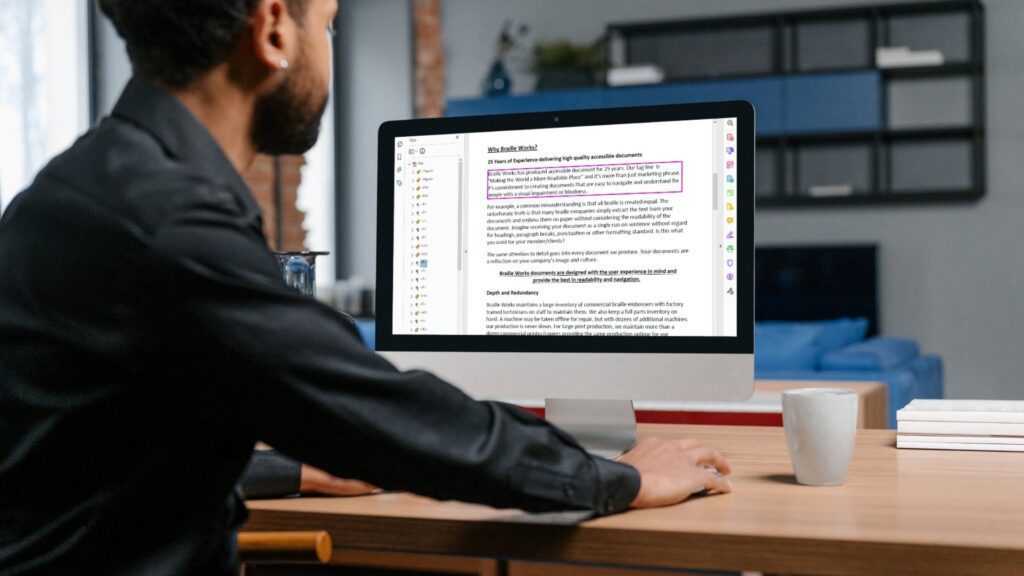
A vendor may run the event, produce the video, manage the website, create the documents, or operate the program. The contract can require that vendor to provide interpreters, captioning, accessible materials, and other communication access.
But when the vendor gets it wrong, it can quickly become the public entity’s ADA problem.
That is why these requirements should be discussed and placed in the contract before the work begins.
Related: You Can Outsource the Work. You Cannot Outsource ADA Responsibility.
Where can an entity start?
A few steps can make a real difference with effective communication:
- Create a written effective communication policy.
- Develop a list of qualified providers before an urgent request is received.
- Include effective communication requirements in vendor contracts.
- Add clear accommodation request information to notices and event materials.
- Review documents, forms, websites, and videos before publishing them for compliance.
- Plan for communication access during emergencies
- Train employees on how to handle requests for alternate communication needs.
- Document requests, decisions, and the services provided.
- Follow up to make sure the communication method worked.
A policy stored in a folder is not enough.
Employees need to know that it exists, where to find it, who to contact, and what to do when someone requests help.
Effective communication does not have to be complicated. It starts with listening, planning, and understanding that people do not all communicate in the same way.
Takeaway #2
Providing information is not enough.
Under Title II, the communication must be timely, accurate, accessible, and effective for the person receiving it.
Related: National ADA Symposium Takeaway #1: Who Is Responsible?